Years ago, when I was young and impetuous, I thought it would be a good idea to allow a business reporter to shadow me—the better to describe what I do. The result was a profile so revealing it won awards for the author. For me, on the other hand, it turned out to be the kind of thing you spend a career rising up to—or desperately living down.


He may already be a winner
by Rob Charm


IN THE COLDEST MONTH, the mailbox is jammed with “cold mail” from magazines. In January, by the dozens, come the big envelopes with the extravagant messages on the outside. 

The New Republic: “Can you be tough, hard and liberal?” 
Harper’s: “The myth of missing children.” 
Automobile: “Win a Corvette.” 
National Geographic: “10 pictures you’ll never forget.” 
Playboy: “50 Beautiful Women…FREE!”

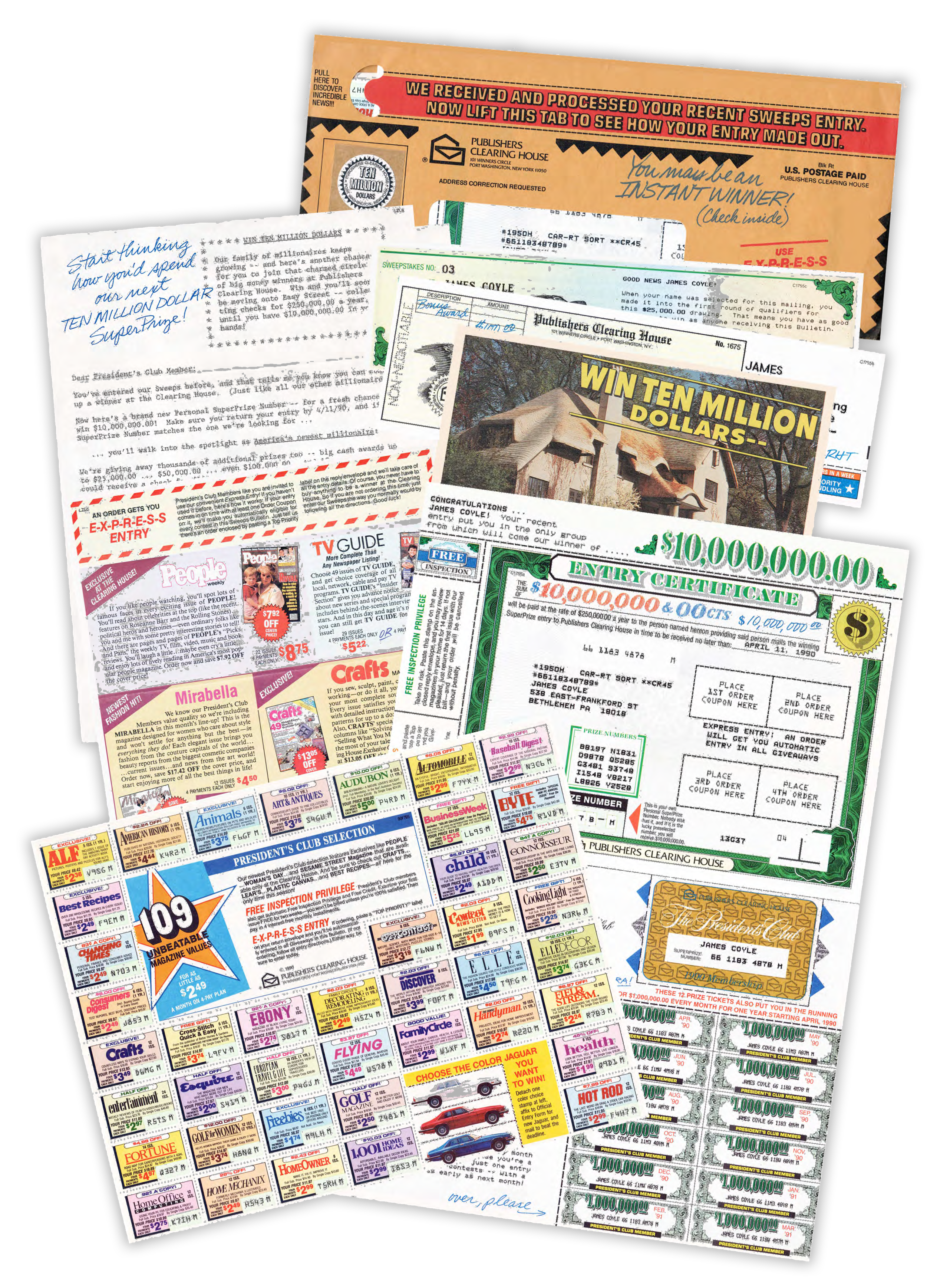
And that’s subtle compared with the sweepstakes packages. Big thick envelopes crammed with “You May Already Be a Winner” letters with promises of prizes, brochures touting houses and yachts, $10,000,000.00 checks (exact to the penny) made out to “Your Name Here,” Ed McMahon leering everywhere…


Publisher’s Clearinghouse Sweepstakes


On this winter’s morning, Richard Riccelli’s mailbox is full of junk mail and he, of course, looks forward to it.

He opens a sweepstakes envelope and a pile of direct mail detritus builds on his carpet. Coupons, stick-em tokens, specimen checks…“

“Every year they seem to enclose more pieces,” Riccelli says. “I guess they assume if you open the envelope and all this stuff falls at your feet, you have to deal with it. It’s like a spider web. You’re involved.” He laughs at the vision of some “occupant” who sends back an order in pure self-defense. Anything to get a response is fair play. This, above all, Riccelli appreciates.

He gathers the pile of what some call “subscription marketing,” some call “direct response advertising,” and others call “audience development,” but what Riccelli, with a smile, calls “junk mail.”

Then he goes upstairs to create some more.


YOU, TOO, CAN EARN BIG BUCKS IN DIRECT MAIL


Nearly 15,000 magazines are published in the United States. 400 new ones are launched every year. And every one of them has a circulation director sweating out how to get the damn thing into the hands of more readers.

No matter how good the current—or “control”—cold mail package, the circulation director is always searching for a new one that pulls better at less cost. Finding it isn’t easy.


WritersDigestCover.jpg

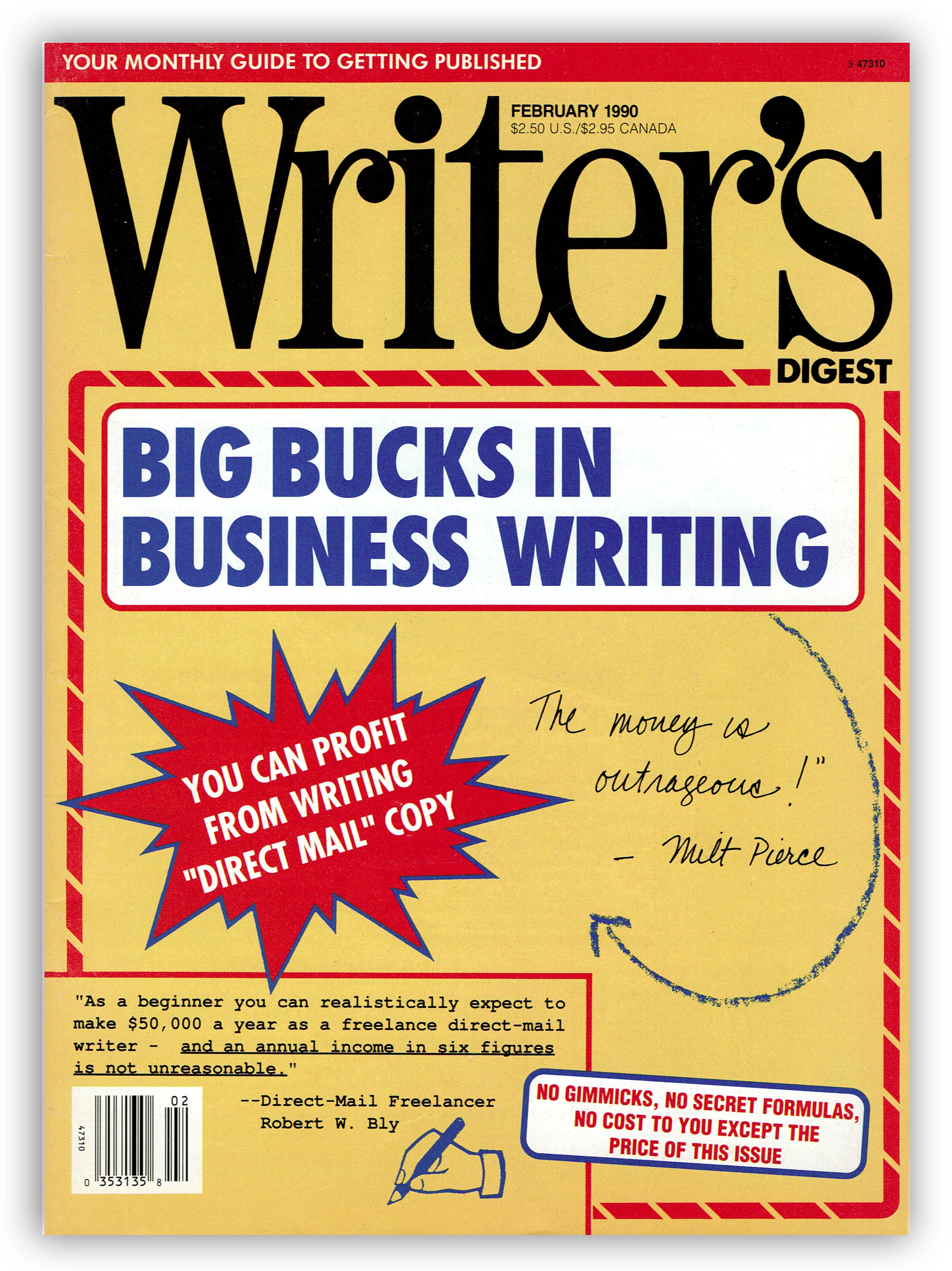
Part of the problem is the medium. Anything called “junk mail” doesn’t get much respect. It looks easy to create. And its apparent simplicity has convinced hundreds of would-be’s that they, too, can put together a package that pulls. A recent Writer’s Digest cover story “taught” beginners how to make “big bucks” writing direct mail copy. Circulation directors cringed anticipating what they’d soon see in their mailboxes.

In the last year or so, the field has become very competitive,” says David Gianatasio, a reporter for Adweek.  “Because there’ve been so many layoffs at advertising agencies, you have a lot of freelancers trying direct mail. They aren’t making much money. I don’t know how good their work is.”

A notch above, from a creative standpoint, is the stuff generated by full-service advertising agencies. Although virtually all agencies claim to “do direct marketing,” this can often mean nothing more than one of their juniors writing something up and putting it in the mail. In the hierarchy of ad agencies, direct mail writers are one step up from the mailroom and one step away from the elevator down.


million dollar mailings.jpg

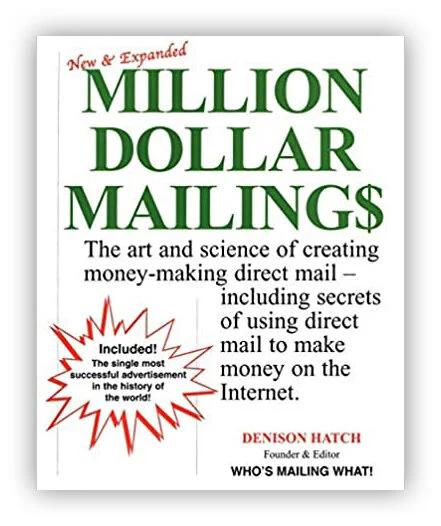
As a result, experienced circulation professionals turn to independent creative specialists who are passionate about the power of direct mail. Superstars in the field—Bill Jayme, Judy Weiss, maybe a dozen more—enjoy incomes in the six figures. They create cold mail packages for big name magazines or well-bankrolled startups. They command fees in excess of $20,000 plus royalties for a basic package…if you can get them.

“You don’t ‘hire’ them,” said the circulation manager of a major national science magazine. “They decide whether they want to be hired.”

Which means circulation managers are always hunting for breakthrough packages from up-and-coming creatives ready to challenge the big guys.

They’re looking for talents like Richard Riccelli. And Riccelli is looking for them. “I figured the best way to be ‘discovered’ was to beat a few of their controls,” Riccelli said. “Response gets a response.”


WHERE DOES JUNK MAIL COME FROM?


Riccelli’s offices are in a colonial era country-house in a small seacoast town north of Boston. Magazines are piled everywhere. Wire baskets are filled with newspaper clippings, hastily scrawled jokes copped from the David Letterman Show, factoids cut from USA Today. 


extra-origins-1.jpg

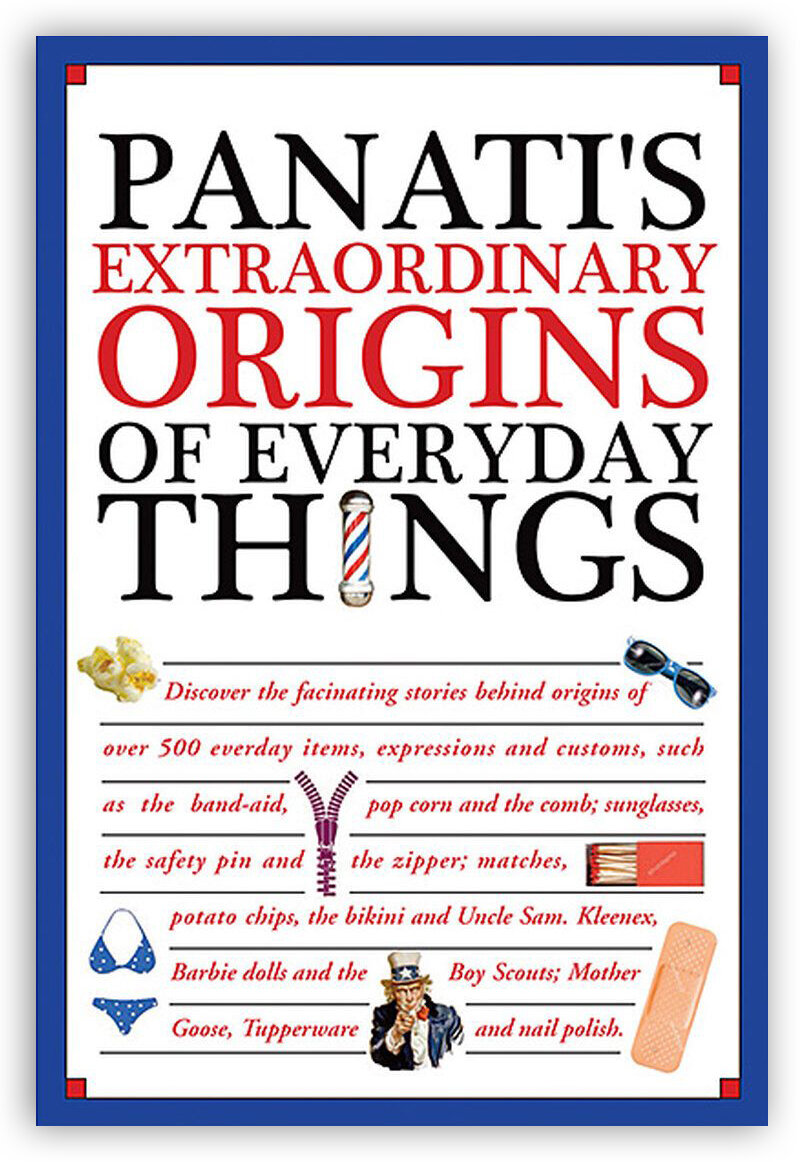
There are surveys taken from journals, post-it notes he’s jotted to himself, ads, proposals, video tapes. Floor to ceiling shelving is jammed with books on advertising, humor, and odd compendiums of strange trivia. There’s one called On An Average Day. (On an average day, 2,982,192 Americans attend a movie.) Another is titled Extraordinary Origins of Everyday Things (chopsticks, brassieres, doughnuts).

Riccelli is the rag and bone man of popular culture. He’s interested in anything that might interest readers. Anything that might give him some wedge into their sales resistance. “Anything,” he says, “that gets a response.”

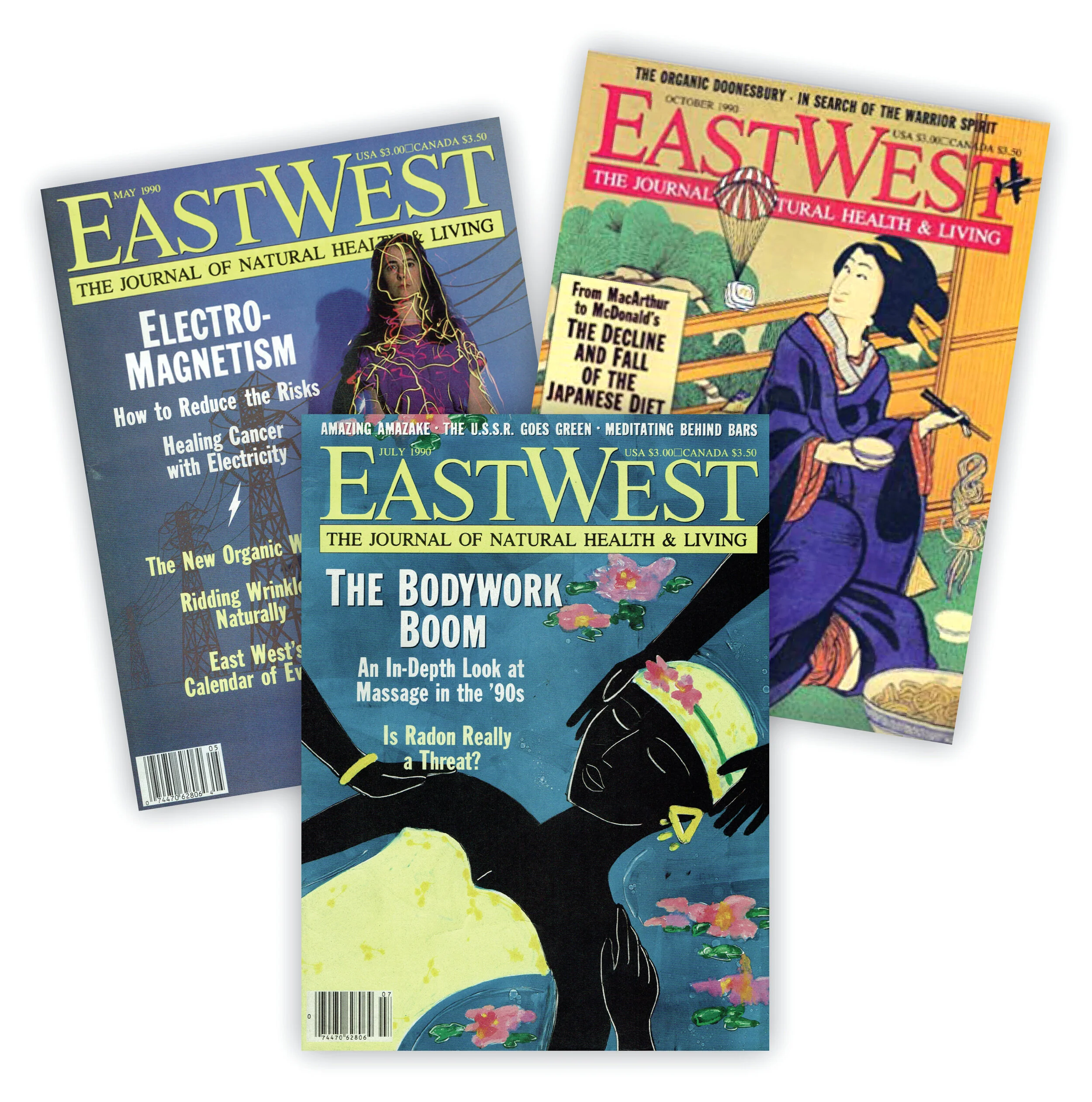
He pulls a book from the shelf. “Where does junk mail come from?” Riccelli likes to ask rhetorically. Here, he hopes. It’s a humor book called, In Search of The New Age (“Reincarnation Life Insurance,” “Astral Projection Tours,” “Do-It-Yourself Firewalking”) and he’s trying to spark ideas for a new client, EastWest Magazine.


EW3up-2.jpg


EastWest is an eclectic national monthly journal of “New Age” interests such as vegetarianism, Asian philosophy, “natural living,” and tofu. The circulation director wants a new subscription folder for display in supermarket racks. Riccelli flips through the book. You never know where junk mail comes from.

“The problem with EastWest,” Riccelli tells the circulation director and distribution manager two days later, “is the name. It doesn’t say what the magazine is about.” Actually he believes the big problem is that what should be a simple thousand dollar piece of business is about to be mired in office politics, and he’s about to be caught between the yin and the yang. But he can’t tell them that.

The name doesn’t describe you. NewsweekCar and Driver—right away you know what they’re about.” He shrugs, “But EastWest?”

He pulls out a carefully drawn mock-up of a new rack brochure. On the front there are six EastWest Magazine covers. EastWest is... the headline. Below each cover is a different subhead. 

EastWest is... good health. EastWest is... whole food. EastWest is... living longer. And then the kicker. EastWest is ... yours free!

Riccelli hands them the copy. As he reads it aloud, they go through the tire-kicking routine with the mock-up; flipping it, folding it, opening it.

They like it—they think they like it—well, the fact is, they like it if the new publisher likes it, and they’d like it a lot better if he was at this meeting, but he’s not, and so it’s hard to know what he’ll say.

Riccelli shows supermarket folders created by other magazines: Time, Skiing, Glamour. He fans them like a Mississippi gambler, the EastWest mock-up right in the middle. It looks good among the competition. He smiles, “I think you can compete.”


PEOPLE LIKE THIS USUALLY  END UP IN NEW YORK


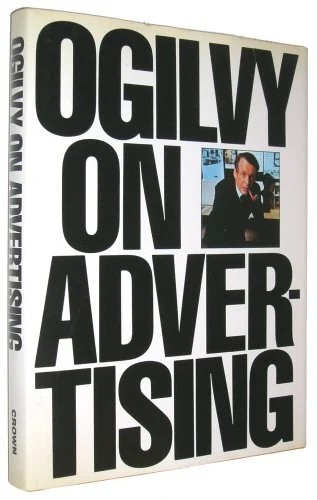
Riccelli has an aggressive intellect, fusion-powered ambition and a taste for risk. People like this usually end up in New York City and that’s where Riccelli headed, landing a job as junior copywriter with Ogilvy & Mather Direct Response, after graduating college in 1977.

“One way into a job in advertising,” Riccelli recalls, “was doing what no one else wanted to do: junk mail.”


ogilvy-on-advertising.jpg

Stanley Winston, vice chairman and executive creative director for Ogilvy & Mather Direct Response, says Riccelli was unusual. Unlike most new hires out of school, “he’d done some fund raising work in college using former New York Yankee star Thurman Munson.” (It was an alumni appeal; Munson and Riccelli both attended Kent State University.) “We thought that was pretty damn good for someone at that level, so we hired him as a junior copywriter. He was one of a number of bright guys we got that year.”

Winston says a lot of entry level hires see direct marketing as just a stepping stone to bigger and better things. “They say, ‘okay, I’ll get some experience here and move on to television.’ But some find they like it.”

Riccelli liked it. “Direct response is the only kind of advertising where you can prove how good you are. You can’t imagine what it feels like to see sacks of mail in response to your ads.”

After nearly three years at Ogilvy, a new marriage and more money led Riccelli to Minneapolis to join the direct marketing division of the advertising agency Bozell & Jacobs. A “year and a day later” Riccelli returned home to Boston. At age 26 he became the direct marketing creative head for Quinn & Johnson BBDO.

“We are looking for someone to run our fledgling direct response unit” said Bink Garrison, president of what is now Ingalls, Quinn & Johnson. “Richard wandered in one day, with his suspenders and his engaging personality. I really liked him. He was a terrific presenter: full of energy. Very bright. Very dedicated to moving the client’s business. So we hired him.”

There Riccelli began his most important professional relationship when he met Will Taylor.


Inc Magazine Shadow.png


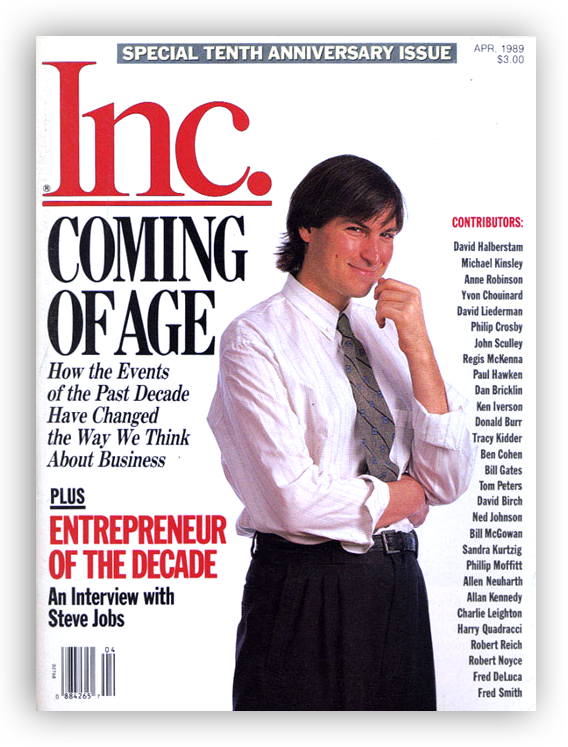
Taylor is vice president of Boston-based Goldhirsh Group, publishers of Inc., Magazine and other related products. At the time, Taylor was director of circulation for Inc., in contract with Quinn & Johnson/BBDO. Taylor asked Riccelli’s group to produce new television commercials to test against the Inc. control spot. “They did a wonderful job. We didn’t want the same old thing,” Taylor recalls. “We asked them to take a real risk; stuff clearly different.”

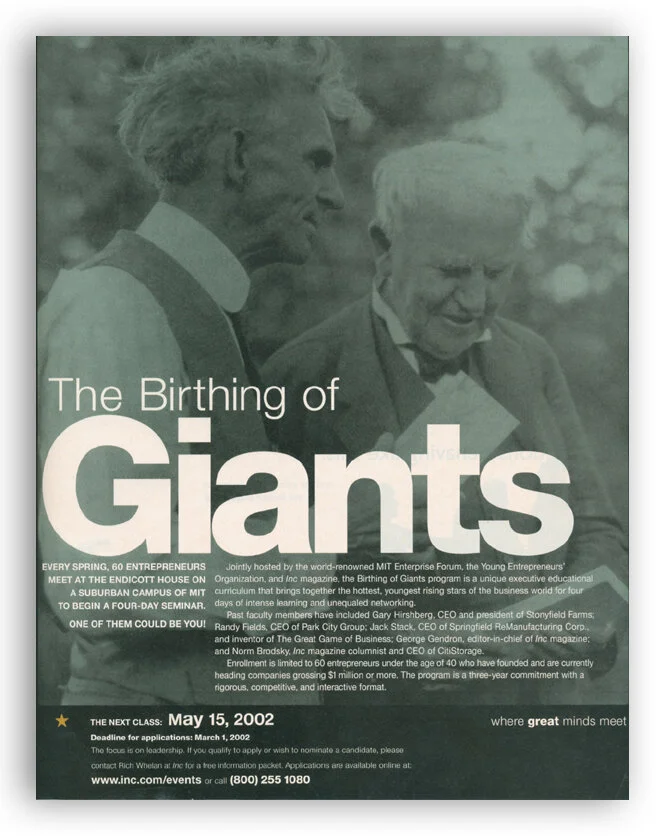
They were different—and impressive—enough so when Riccelli started his own direct response advertising agency, Taylor put him on retainer for Goldhirsh’s subsidiary products. Business diaries. Instructional videos. Special reports. Events. But not Inc. Magazine itself.

“We were his first client and it gave him a steady income,” Taylor says. “Enough to get his business going. We liked it because we could ask him to do as much as we needed. It was up to him to say ‘stop, I can’t do more.’ The fact is we never exhausted Richard’s ability to deliver.”


RRInc Birthing of Giants.jpg


But Riccelli found running an agency was more than delivering ads. “I never learned to delegate. I was the account guy. The art guy. The writer. The new business man. The secretary. The only thing I was creating was tension and frustration for everyone involved.”

He decided to sell. Jim Mullen, owner of a highly-successful $40 million general ad agency based in a sprawling old mansion on Boston’s North Shore, was targeted. Mullen also did work for Goldhirsh Group. So Riccelli sent a “we-share-the-same-client-I-though-it-would-be-nice-if-we-met” letter. It seemed to jog Mullen into deciding he needed a direct marketing division.

The deal went through in January 1987. By June, it had fallen through. The marriage of businesses was not a happy one. Mullen and Riccelli were as different as general advertising with its emphasis on image, and direct marketing with its emphasis on results.

Riccelli decided to quit and start over. But not in another “full-service” direct marketing agency. This new agency would work just for subscription-based clients—magazines, newspapers, newsletters, membership organizations. And Riccelli would limit his work to creative only—concepts, copy and design—so he could do the work personally, hands-on.

Quit and start over. That wasn’t just Riccelli’s idea, it was his wife’s too. Suddenly, he was facing a divorce. “Talk about starting over,” Riccelli says. “There I was on my own. No agency. No staff. No clients. No offices. And soon, no marriage. I’m thinking, “Terrific, now what do I do?”

Answer the phone. Will Taylor called. Riccelli was wrong, he still had one client.


CONVENTIONAL THINKING IS THE ENEMY


Sometimes the biggest challenge a copywriter faces is getting his message past the client and out to customers. Riccelli is directing a photo shoot when the studio’s fax spits out a memo from EastWest. He is about to “meet” his new client, the publisher of EastWest, Eliot Wadsworth.

Wadsworth does not like the supermarket folder. He feels Riccelli’s “newer, better you” copy misses the point. And he spends six dense paragraphs telling why.

“The point is,” the publisher writes, “that it is conventional thinking that is the enemy. A lot of it originates in the world of commerce and has been accepted only because of the force and effectiveness of the media in shaping people’s minds.”


think different ghandi.jpg


The brochure doesn’t convey EastWest’s role in making a newer, better world. Wadsworth has big plans for this little supermarket flyer, and he wants to discuss it further.

Riccelli reads this and thinks, “He wants to start a moral revolution. I just want to get him some response.”

But Riccelli is not unhappy. This brochure is an entrée. His goal is to create a new EastWest cold mail package. And to get that he has to be creative. Not to sell readers, but to sell Wadsworth.


CREATIVITY VS. THE COMPUTER


Will Taylor gave Riccelli a series of direct response ads for Inc.’s subsidiary products. More diaries and videos. More special reports and events. But, as before, not Inc. Magazine itself Privately, Riccelli wondered if he was ready to beat the cold mail package of a major national magazine. And he wondered if he was ready to find out. “On an assignment like that, there’s no place to hide,” he says.

As Taylor moved up, Robert LaPointe became the new Director of Circulation at Inc., and LaPointe put Riccelli—ready or not—on retainer.

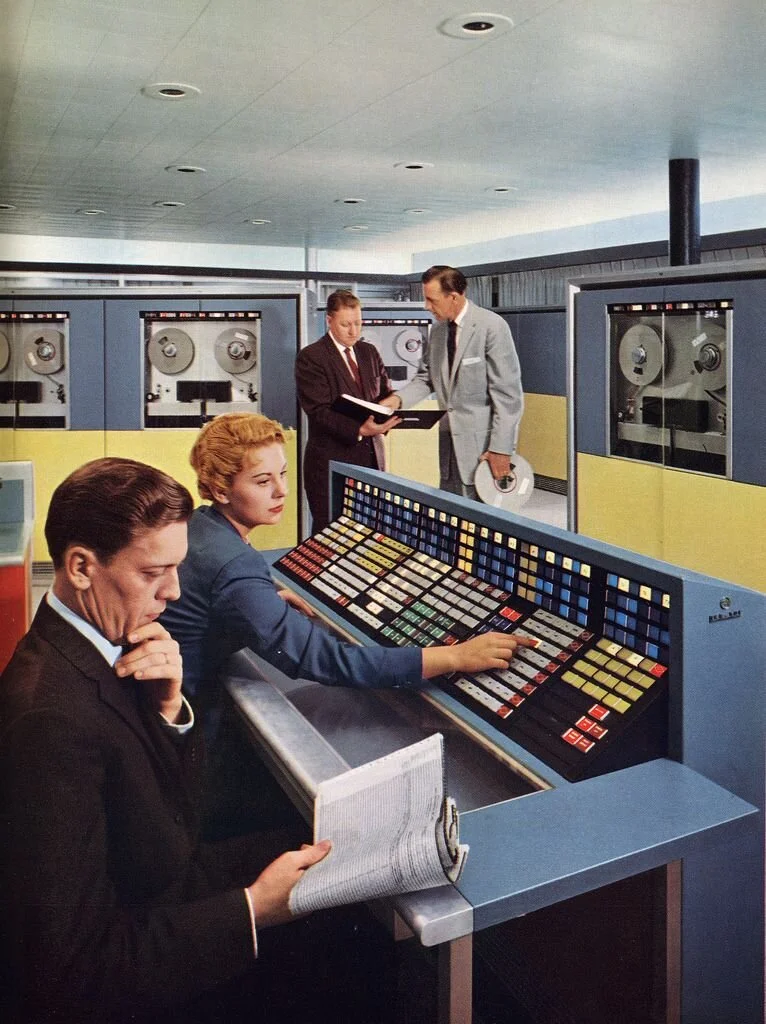
This went against Inc.’s traditional preference for hiring one-project-at-a-time freelancers. And it went against a growing industry trend that says the sure way to certain circulation growth is through computer analysis and modeling, not dramatic breakthroughs with gutsy—but highly unpredictable—creativity.


old computer image.jpg


“Circulation is made of two things: creative and analytics,” says LaPointe. “Today, less time is spent on the creative versus the analysis. Fifteen years ago it might have been 50-50 in terms of staff time. Today, it’s more like 80-20.”

The main thing circulation directors do now is test components of the mailing, not the creative concept.

“We’re constantly testing everything,” LaPointe says. Premiums, hard offers, soft offers, seasonal timing, price, package formats, brochure, no brochure… we probably test hundreds of different variations in a year for cost and response.”

All these variable are measured and projected with sophisticated computer software that models the results. Data crunching is in the ascendancy in circulation direct marketing and creatives like Riccelli are feeling the pressure.

That’s not to say these things are infallible. This reporter is known to some friends as “Bob” Charm and yet, due to a computer error somewhere, I have, for years appeared on numerous and consequently unsuccessful junk mail solicitations as “Boob” Charm. And that’s the advantage for writers like Riccelli. Direct mail may be sent by computers. But it is received, discarded or responded to by people.

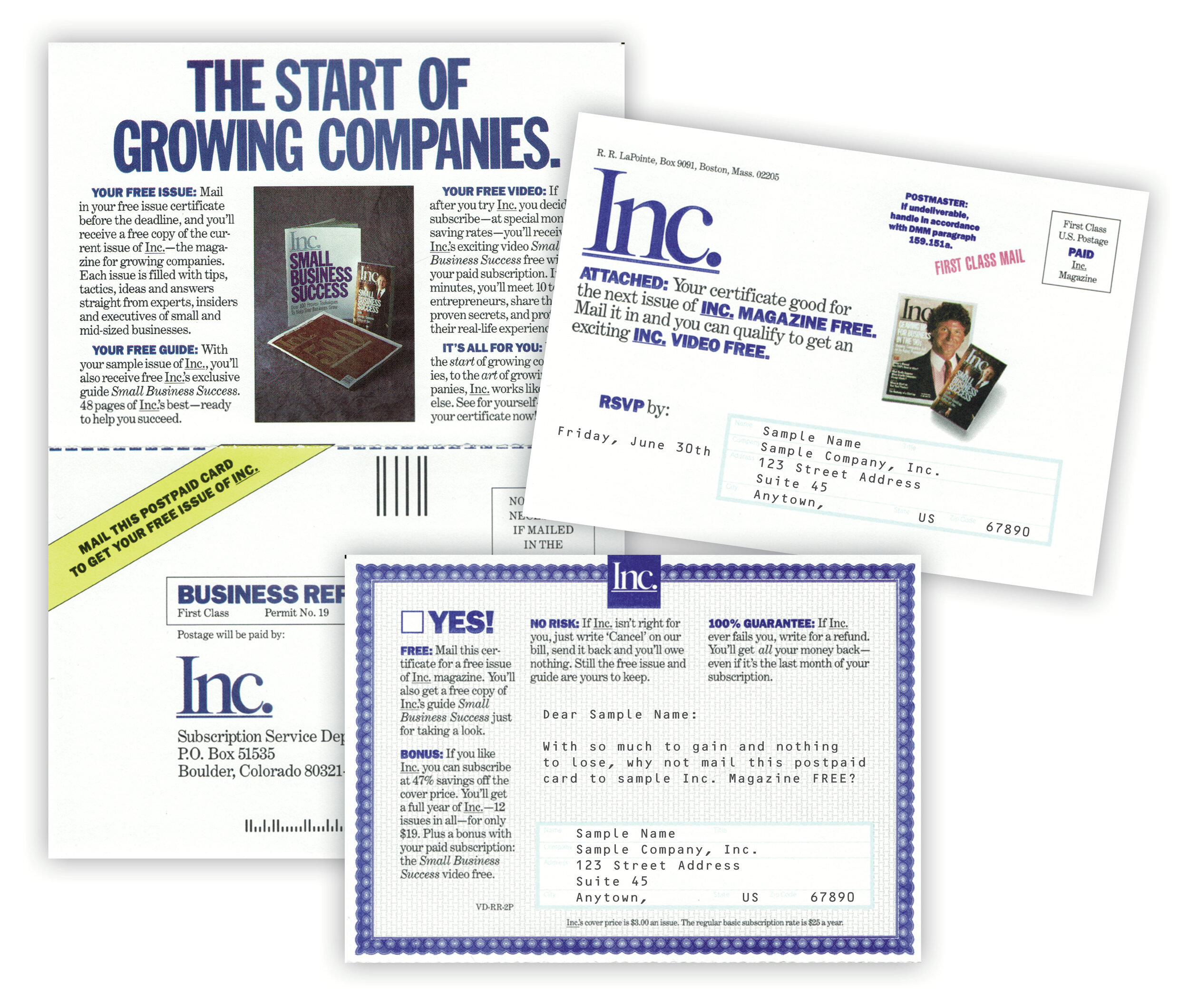
Inc.’s existing cold mail control package was one of the simplest, most cost-effective in the business, however. It was a simple double postcard folded over. Half was the sales copy. Half was the reply card. 

Cold mail packages usually have a life span of about two years. Inc. had been using their double postcard for six years, and in direct mail that’s forever. In early 1989, LaPointe asked Riccelli to come up with a new idea to test against it.

And Riccelli choked.



A ‘CREATIVE’ SOLUTION


A week after his memo, Wadsworth met with Riccelli in person and asked him about doing a cold mail package for EastWest. Riccelli had a surprise answer. “No, I don’t think I’m right for EastWest Magazine.”

The supermarket rack brochure—now in its third incarnation—had taught Riccelli that Wadsworth liked to meddle. He was opinionated on, and often hostile to, advertising. As Riccelli wrote in reply to Wadsworth’s memo, “I’m always leery of creative that generates more words of comment than the length of the original copy.”

So he kept fending Wadsworth off until Wadsworth found himself in the interesting position of trying to sell Riccelli on the idea he was right for the magazine. When Riccelli came up with an idea. “If I were you,” he said to Wadsworth, “I’d write my own package as one of the tests.”

Wadsworth was taken aback, but flattered by this. “Do you think I could?” “Of course,” Riccelli said. “You write one, I’ll write one, and we’ll test them.”

Yes. Wadsworth liked that idea.


SOULLESS EFFICIENCY


There was a logic to the failure of Riccelli’s cold mail package for Inc.—he was being too logical. “Tests are judged strictly on cost,” Riccelli says. “So I reached for all the things that keep costs down, all the format and production tricks that are technically perfect.”


INC DPC.jpg


Instead of taking a fresh creative approach, he became a efficiency expert. He stuck with the double postcard format because, logically, it was inexpensive to produce. He offered a new premium—a video—because, logically, videos were pulling winning responses for other magazines.

He got hung up on making his double postcard coldly, technically perfect. He spent hours fussing with small graphic elements, playing with ink colors, trying out typefaces. He sweated absurd details like whether to say “the sample issue is yours to keep free” or “the free sample issue is yours to keep.” He worried over the structure of soft offers, money-back versus risk-free guarantees, the amount of personalization…“

I choked,” Riccelli says “because I didn’t have a real idea.” He was doing it by the numbers. The result was a soulless piece of mechanical creativity that a computer analyst at any junk mail lettershop could have cranked out.

And it failed. By a lot.


THE EXPERTS SPEAK


For Riccelli, it looked like he’d blown his big chance. But for Inc., with dozens of tests running concurrently, it was just another minor blip on the screen.

The new problem was a new test against the current Canadian cold mail control. Riccelli didn’t care about Canada. Canada was a route well north of the path he hoped to follow to fame and fortune. Canada was, well, the junk mail of junk mail. A Canadian package was something to create quickly—before Inc. had a chance to fully appreciate just how badly his U.S. package had lost.

The Experts Speak 2.jpg

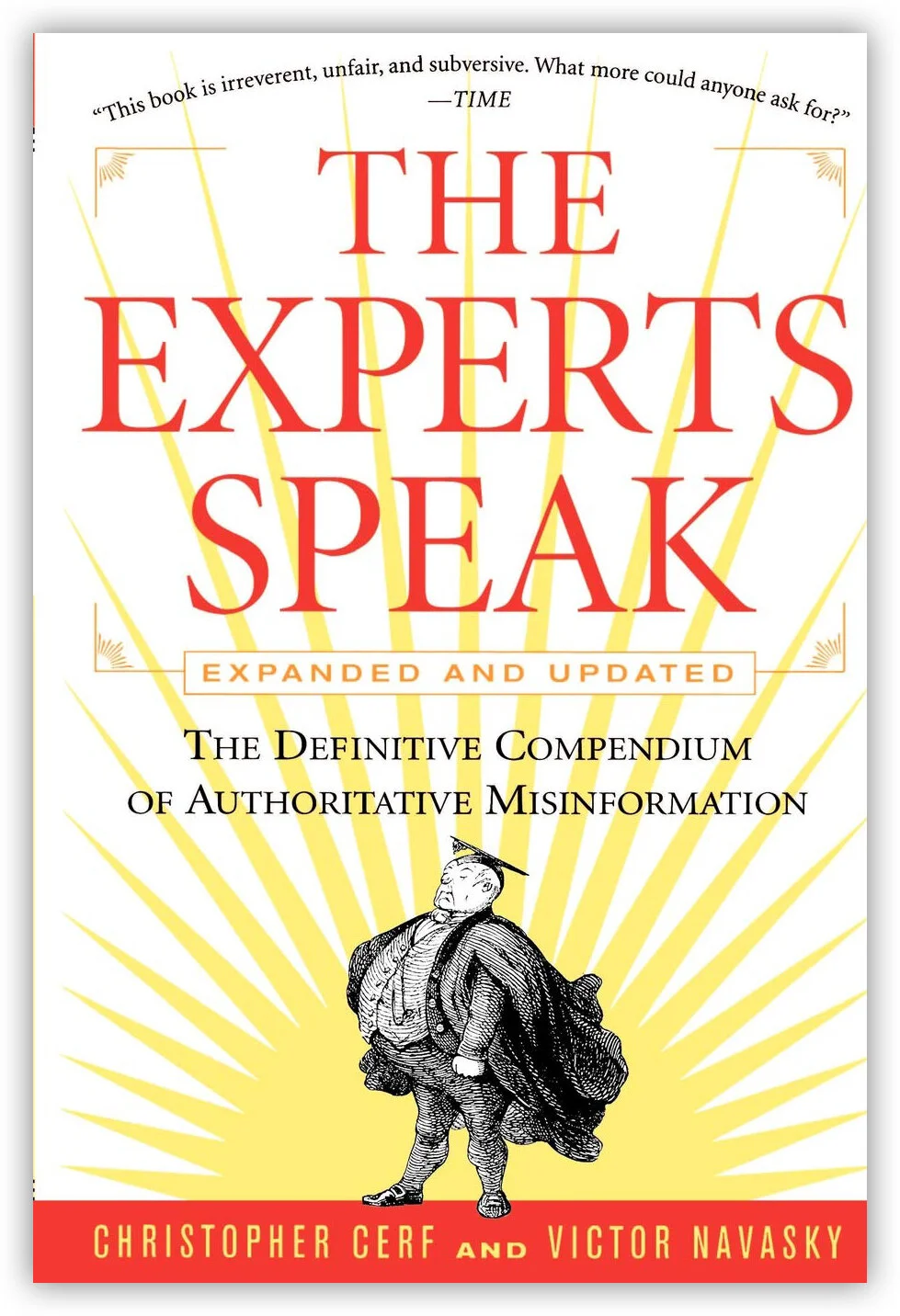
Riccelli remembered this book, The Experts Speak, a collection of famous wrong-headed declarations from soon-to-be ignored “experts” Page after page of quotes declaring man would never fly, telephones would never work, Willie Mays would never amount to much As he flipped through the pages, it clicked.

This is what starting a business was all about. Going up against the nay-sayers, all those in-laws and bankers and “experts” so eager to shoot down an entrepreneur’s dream.

And starting and building a business was what Inc. Magazine was all about. Readers are drawn to Inc. because in its pages, if no where else, there are people telling that entrepreneur “it can be done…and here’s how to do it.”

Riccelli had an idea.

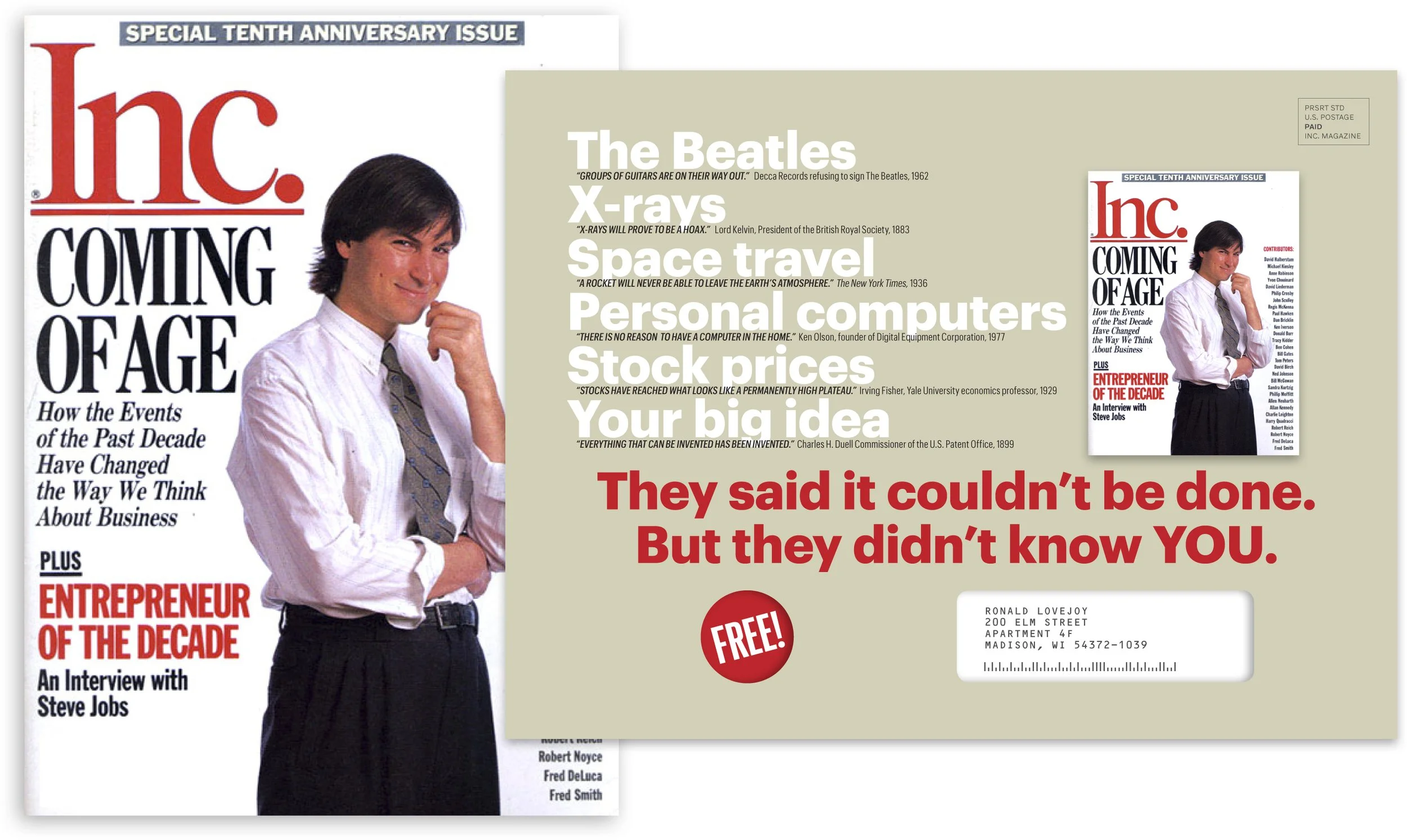
Take a big 9 x 12-inch envelope and run some of the biggest whoppers pulled from “The Experts Speak.”

“Groups of guitars are on the way out.” So said a Decca recording executive rejecting the Beatles in 1962.

“A rocket will never be able to leave the Earth’s atmosphere.”  So said the New York Times, in 1936.

“There is no reason to have a computer in the home.”  So said Ken Olson, founder of Digital Equipment Corporation in 1977.

Then Riccelli wrote a headline to run with the quotes. They said it couldn’t be done. But they didn’t know YOU.


Well, there it was, the perfect message to reach the perfect Inc. reader—an entrepreneur trying against all odds, to get a fledgling business off the ground.

Inside that 9x12-inch envelope, there was a simple one-page letter, and a reply card with a red token good for a free issue of Inc. Magazine and a free copy of Inc.’s booklet “Small Business Success.” That was all—and all Riccelli needed because now he had a real idea.

A big idea. This new Canadian cold mail package beat the old control by double.

The same package began to step test in the U.S., and based on the initial response, LaPointe says, for the first time in six years, it has a shot of beating Inc. Magazine’s control postcard.

“It’s the best package I’ve seen us do through anyone,” says LaPointe. “I wouldn’t be surprised if it became our new control.”

And that, he says, is the sort of success that should get prizes from one end of the direct marketing business to the other.

“Unfortunately,” LaPointe says, “Direct marketing awards are not given on results. They’re based on look and feel, because no circulation manager wants to reveal any real numbers.”

So Riccelli pulls off the greatest success of his career and ends up facing that old question from Philosophy 101: If a tree falls in a forest…


CONGRATULATIONS…


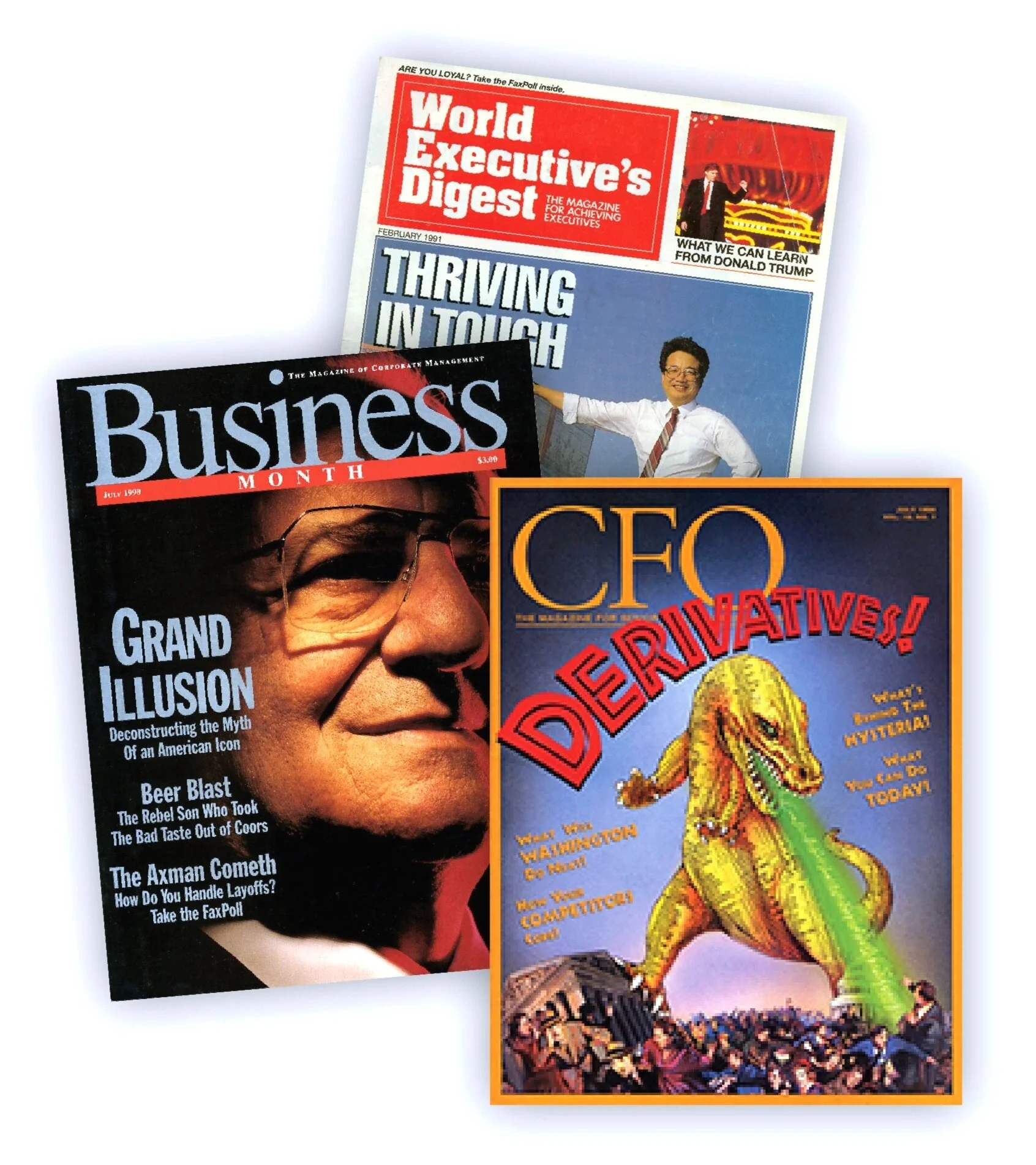
Business was good through the next few months. Riccelli produced a variety of efforts for Inc. Magazine. A new billing and renewal series. A Christmas gift subscription program. Coupon ads for Inc.’s videos and books. He created new cold mail packages for Business Month and CFO magazines. 


CFO-WED-BM.jpg


He helped launch P.S., a new Patricia Seybold technology newsletter and SportsBoston, the second of a national network of regional sports magazines. Wraps, blow-ins, television—he even had his work translated into Chinese to help World Executive’s Digest sell more subscriptions.

And the money was great. He grossed over $200,000 for the year. But he wasn’t getting a crack at the big national magazines.

So in January, as his mailbox filled with cold mail he didn’t create, Riccelli entered his Inc. Magazine package in the Circulation Direct Marketing Awards competition conducted by Folio: and the Magazine Publishers Association.

Two months later, a letter arrives: “Dear Richard, Congratulations! Your entry has been selected as a finalist…”

It was from Folio: They wanted him to come and find out if he won at the awards luncheon in New York in April.


That’s right. They were using—how else to look at it?—the classic junk mail come-on. You may already be a winner…

It worked, too. ▪

folio logo copy.png


ABOUT THE AUTHOR

Rob-Charm-Writer.jpg


Rob Charm wrote feature articles for Autoweek, Detroit Monthly, and the Boston Globe Magazine on subjects as diverse as Domino’s Pizza magnate Tom Monaghan, “Spenser” author Robert Parker, and finally, his own unflinching struggle to survive.

A heart attack due to the complications of stroke prematurely ended Rob’s life in February of 1998. He was 44 years old.

Please consider a donation to the American Stroke Association.